Improving Website Performance: Key Metrics for UK Businesses
3 February 2026

Introduction
In today’s digital age, the performance of your website is critical to the success of your business. For UK companies, particularly in bustling areas like Manchester and Middleton, understanding and improving key website performance metrics can lead to enhanced user experience, increased conversions, and ultimately, greater revenue. This article delves into the essential metrics that UK businesses should focus on to optimise their websites effectively.
Table of Contents

- 2.3 Conversion Rate
- 2.4 Time on Page
- 2.5 Mobile Responsiveness
Understanding Website Performance
Website performance refers to how quickly and efficiently a website responds to user actions. It encompasses various factors, including loading speed, usability on different devices, and overall user satisfaction. Poor website performance can lead to high bounce rates and lost revenue, making it essential for UK businesses to continuously monitor and improve these metrics.
Key Metrics to Monitor
Page Load Time
Page load time is one of the most critical metrics affecting user experience and SEO rankings. According to Google Search Central, a site should ideally load in under three seconds. For businesses in Manchester and Middleton, this is particularly important as users increasingly expect fast, responsive websites.
Bounce Rate
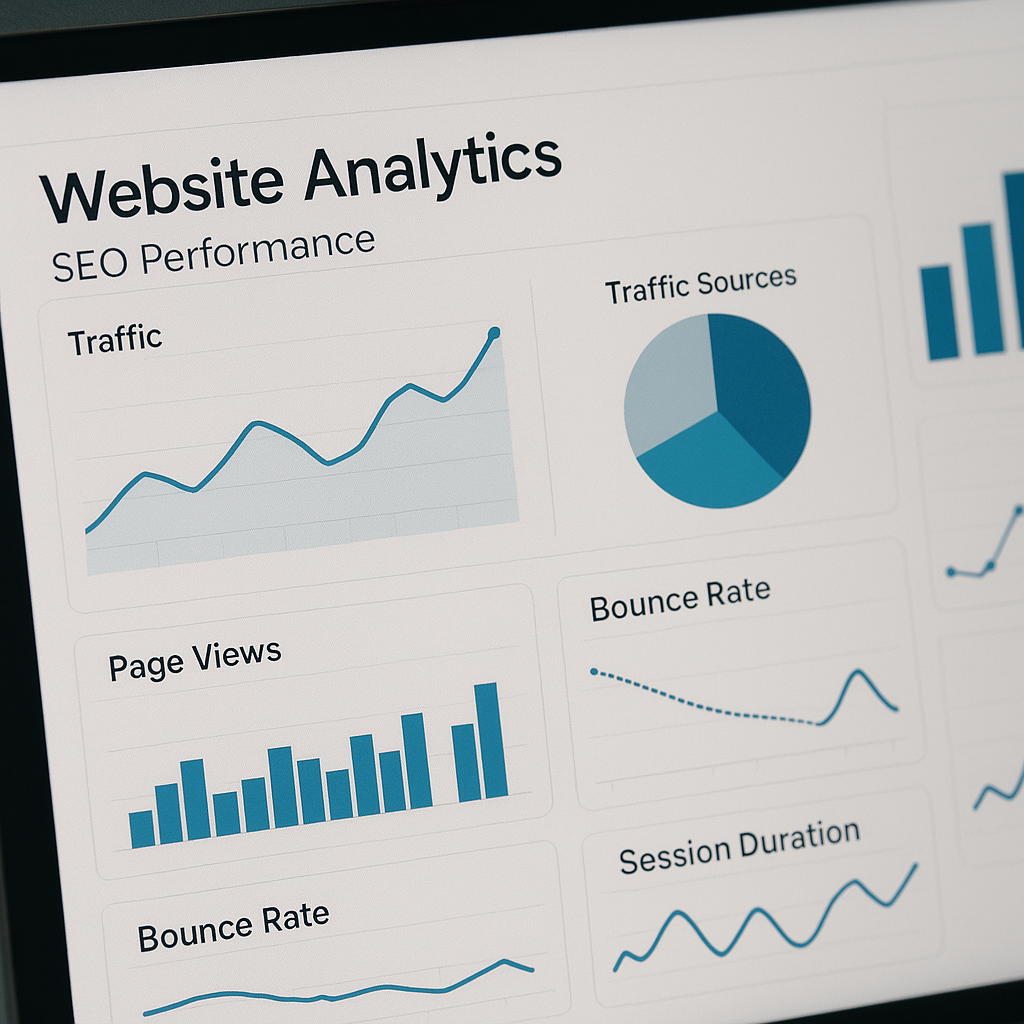
The bounce rate indicates the percentage of visitors who leave your site after viewing only one page. A high bounce rate can signal that your content is not engaging or relevant to users. Aim for a bounce rate below 40% for optimal performance. Tools like Google Analytics can help track this metric effectively.
Conversion Rate
The conversion rate measures the percentage of visitors who take a desired action, such as making a purchase or signing up for a newsletter. Understanding your conversion rate helps identify areas for improvement in your website’s design and content. A conversion rate of 2-5% is typical for many UK e-commerce sites.
Time on Page
Time on page indicates how long visitors stay on a particular page. Longer times can suggest that users find the content valuable. Aiming for an average time of over 2 minutes can indicate good engagement levels. This metric can be improved through compelling content and clear calls-to-action.
Mobile Responsiveness
With the rise of mobile browsing, ensuring your website is mobile-responsive is crucial. Google prioritises mobile-friendly sites in search rankings. Use web.dev to assess your site’s mobile performance and make necessary adjustments to enhance user experience.
Tools to Measure Website Performance
Several tools can assist UK businesses in monitoring website performance metrics:
- Google Analytics: For tracking user behaviour and understanding traffic sources.
- GTmetrix: Provides insights into page load speed and overall performance.
- Pingdom: Monitors website uptime and performance from multiple locations.
- Lighthouse: An open-source tool from Google that audits performance, accessibility, and SEO.
Improving Website Performance
Improving website performance is an ongoing process. Here are some practical steps to consider:
- Optimise Images: Ensure images are compressed and appropriately sized to reduce load times.
- Minimise HTTP Requests: Combine files where possible to reduce the number of requests made by the browser.
- Use a Content Delivery Network (CDN): A CDN can speed up content delivery by using servers located closer to the user.
- Implement Caching: Caching can significantly reduce load times for returning visitors.
- Regularly Update Content: Fresh, relevant content can keep users engaged and improve SEO rankings.
Key Takeaways
| Metric | Ideal Value | Importance |
|---|---|---|
| Page Load Time | Under 3 seconds | Enhances user experience and SEO rankings |
| Bounce Rate | Below 40% | Indicates content relevance and engagement |
| Conversion Rate | 2-5% | Measures effectiveness of website design and content |
| Time on Page | Over 2 minutes | Reflects content value and user engagement |
| Mobile Responsiveness | Fully responsive | Essential for SEO and user satisfaction |
FAQs
What is a good page load time?
A good page load time is generally considered to be under 3 seconds. Anything longer can lead to high bounce rates.
How can I reduce my bounce rate?
To reduce your bounce rate, ensure your content is engaging, relevant, and easy to navigate. Improving page load times also helps.
What tools can I use to measure my website's performance?
You can use tools like Google Analytics, GTmetrix, and Pingdom to measure various performance metrics.
Next Steps
Improving your website performance is crucial for the growth of your business. If you’re ready to take the next step in optimising your website, contact us today or explore our web development services to enhance your online presence.
Ready to grow traffic?
Quantaum helps UK businesses build fast, secure websites that rank and convert. Let’s talk.
Contact Quantaum →